Contact : lea-dir@ensea.fr
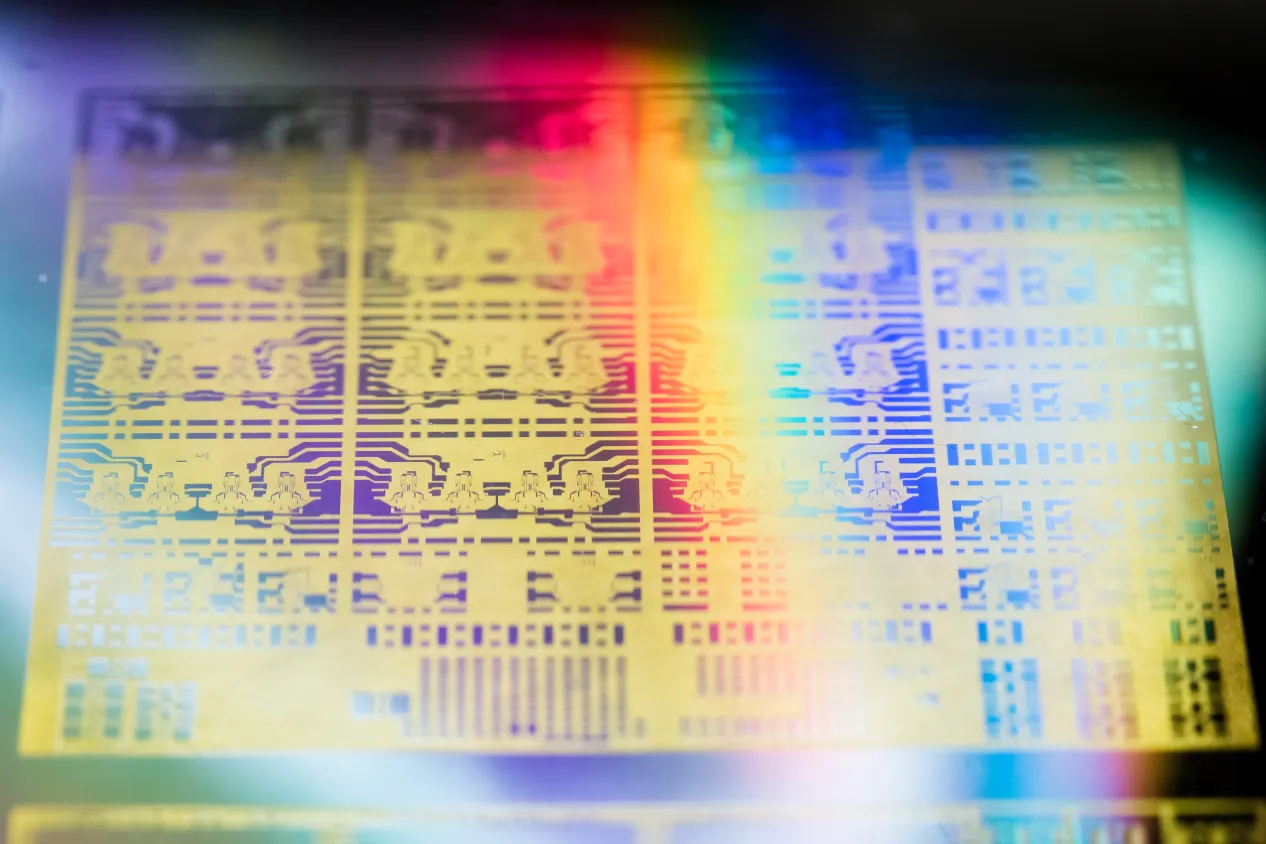
The LÉA, Laboratory of Electronics and Automation, is a research unit of ENSEA. It brings together teacher-researchers, researchers, engineers, doctoral students, post-doctoral students and technical and administrative staff.
At ENSEA, the missions of the LÉA consist of:
- to unite teacher-researchers from ENSEA within a coherent scientific framework, structured around complementary thematic areas,
- to organize and support the research, production, dissemination and application of scientific and technical knowledge,
- to contribute to the training of students in and through research,
- interact with its scientific, industrial and economic environment.
Scientific positioning
The scientific positioning of LÉA is that of a research laboratory in the fields of electronics and nonlinear automation. The association between these two fields, a classic feature in the research world, allows for coordinated and complementary action between members of these two disciplines.
The laboratory has developed original skills recognized nationally and internationally, as evidenced by publications, patents, projects in partnership with industry and academic bodies, and national and international collaborations.
In the field of electronics, the scientific activity of LÉA is a collaborative activity focusing primarily on the design and characterization of fast integrated electronic circuitsIn this field, experimental results, representing the international state of the art, show functional circuits exceeding 100 Gbit/s per channel. These results have enabled the extension of these activities to the fast power switchingThe aim is to design and implement fast power switching circuits that allow, for power levels of a few tens of kW, switching at a relatively high frequency (a few MHz).
On the other hand, the skills acquired in the design of high-speed circuits for optical communications have been used to design high-speed electronic systems for the harvesting ambient RF energy.
Applications: fiber optic communications, embedded systems, quantum superconducting circuits
In the field of automation, LÉA relies on advanced approaches such as robust control, predictive control, state estimation, fault detection, system identification and nonlinear or hybrid systems.
Working closely with national and international industrial and academic partners, LÉA participates in numerous projects. This positioning makes the laboratory a strategic player in the study and control of complex dynamic systems.
Applications: robotics, power electronics, energy management of embedded systems for transport (automotive, aeronautical), multi-agent systems, energy optimization and smart grids.
The scientific positioning of LÉA fits perfectly into ENSEA's new "Synergy 2024-2028" strategy. In particular, these projects are part of the strategic axis "Science and Expertise: Being at the forefront in our fields of training, research and innovation, with electronics at the heart".
Scientific equipment
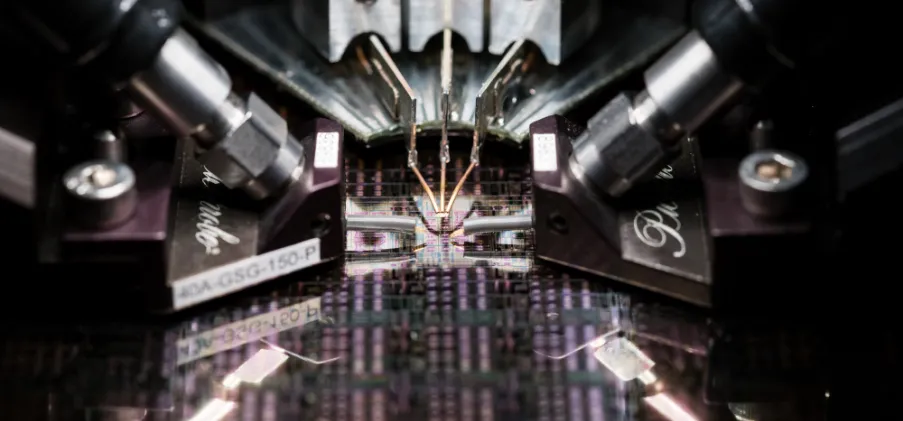
The LÉA currently has a high-performance technical platform, consistent with its objectives. In particular, the laboratory possesses heavy equipment for measurements and scientific instrumentation necessary for its research activities: air-cushion probe measurement station, fast real-time oscilloscope, 70 GHz vector network analyzer, semi-automatic wire-bonding station, rapid prototyping and small-series manufacturing equipment, etc.
As part of its automation activities, LÉA has:
- of an experimental platform dedicated to renewable energies, integrating power converters (choppers, inverters) and simulated loads for reproducing photovoltaic or wind power scenarios. This platform enables the validation of advanced control strategies applied to intelligent energy management in microgrids.
- From experimental power converter benches used for the validation of nonlinear control strategies and switching controls, in the context of power electronics and renewable energies.
- From an embedded real-time control platform, integrating microcontrollers, DSP, FPGA and rapid prototyping systems, enabling the testing of advanced control laws.
- A set of multirotor drones equipped with onboard sensors (IMU, GPS, cameras, environmental sensors) for the development of command, observation, diagnostic and autonomous navigation strategies.
- Terrestrial mobile robots used for experimentation on multi-agent cooperation, distributed consensus and reconfiguration in uncertain environments.
- From an experimental binary-controlled inverter control platform dedicated to the study of optimal energy strategies in microgrid or distributed production contexts.
Examples of ongoing projects
ANR project “MilliJosephGaN” (2025-2029):
The goal for LÉA is to design low-noise gallium nitride amplifier integrated circuits in the [75; 110 GHz] band for quantum measurement applications. This project opens up exciting new perspectives in the field of quantum circuits.
The partners of LÉA are the CNRS IRL-LFQ (Laboratoire Frontières Quantiques) and IRL-LN2 (Laboratoire Nanotechnologies Nanosystèmes) laboratories of the University of Sherbrooke (Canada), and the IEMN (Institut d'Électronique de Microélectronique et de Nanotechnologie, Lille, France).
This project is funded by the French National Research Agency (ANR).
France 2030 Project “Chameleon” (2025-2029):
The laboratory is developing an ambitious collaborative research project for the development of a low-carbon drone responding to the call for projects "Produce low-carbon aircraft in France" of the France 2030 plan.
The main challenges of this project are significant carrying capacity and autonomy, reduction of environmental impacts (low carbon, low noise, etc.) and the societal acceptability of the establishment of regular drone flight lines.
LÉA's participation mainly consists of designing, manufacturing and certifying fast power switching electronic circuits for the drone's propulsion line.
This project, which aims to produce a low-carbon drone, fits perfectly into ENSEA's new "Synergy 2024-2028" strategy, particularly in the strategic axis "Impact: Contributing to a value chain for sustainable development".
This project is funded by Bpifrance.
Contact LÉA